The Front Desk Just Got Quiet: How Main Street Shops Are Letting a Chat Bubble Answer the Phone
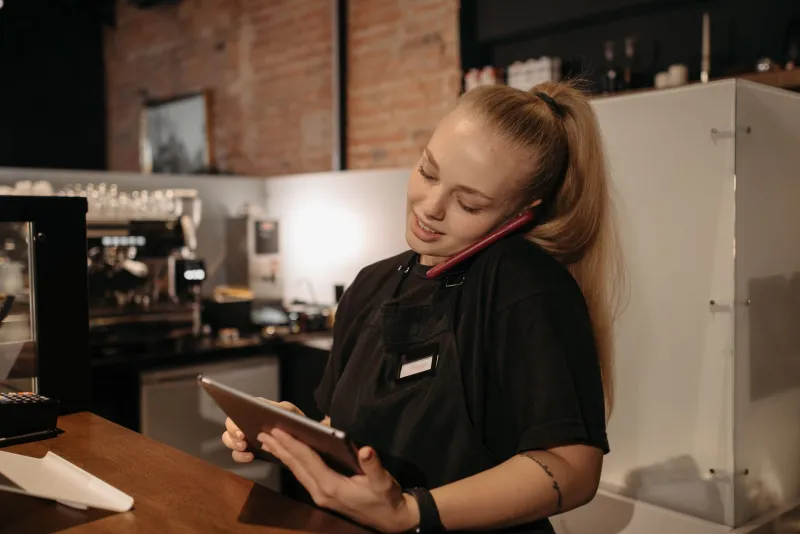
At 8:15 on a Tuesday morning, the front desk at Bright Smile Dental in Columbus, Ohio doesn't ring. It used to—back when the office had two receptionists juggling appointment calls, insurance questions, and the occasional angry voicemail. Now there's a chat widget on the website, a text line on the appointment card, and one person who handles all of it.
"We didn't set out to kill the phone," says office manager Dana Whitfield. "The phone killed itself. Nobody under fifty wants to call anymore."
She's not wrong, and she's not alone. A quiet shift is happening on main streets across the country: the first point of contact at neighborhood businesses is increasingly a chat window, not a human voice.
The Numbers Behind the Silence
Small business owners don't need a research firm to tell them what their missed-call logs already show. Industry surveys have suggested that a huge share of calls to service businesses—plumbers, HVAC techs, dental offices—go unanswered during working hours, and that a large percentage of customers simply won't call back. They'll try the next name on Google instead.
Chat flips that math. A message sits patiently until someone answers. The customer gets a receipt of their request, the business gets a written record, and nobody has to play phone tag over a filling.
For Marcus Delgado, who runs a two-truck plumbing outfit in Mesa, Arizona, the switch was about survival during labor shortages. "I couldn't hire a full-time dispatcher," he says. "A chat system costs less than a hundred bucks a month. A dispatcher costs four thousand. That's not a close call."
What the Front Desk Used to Do (That Chat Still Does)
The front desk was never just about answering calls. It performed a handful of jobs that owners are now reassembling piece by piece:
- Triage. Which jobs can wait, which are emergencies, which customers are repeat business.
- Scheduling. Filling slots, rescheduling, confirming—the unglamorous plumbing of a service business.
- Reassurance. A friendly voice that makes a nervous patient or an anxious homeowner feel like they picked the right shop.
Modern chat setups handle the first two well, especially with templates, booking integrations, and—increasingly—AI assistants that answer the routine stuff at midnight. The third one is where it gets interesting.
"Customers read tone now instead of hearing it," Whitfield says. Her team's workaround: short, warm replies with the customer's name and a specific next step. "'Got it, Sarah—Dr. Patel has a Tuesday 2 PM open, want me to hold it?' beats a phone script anyway. It's faster for both of us."
What Gets Lost in Translation
Not everyone is celebrating. Salon owner Priya Raman in Portland kept her front desk after a six-month chat-first experiment flopped.
"Hair is personal," she says. "People book a color correction because something went wrong somewhere else. They want to explain it, and they want a human to say 'we've got you.' A chat window made us feel like a form."
She also noticed an age split. Her clients over sixty—the backbone of her weekday schedule—never touched the widget. Some regulars quietly stopped booking until a stylist called them personally.
There's a subtler loss, too: upselling and reading the room. A good receptionist hears stress in a voice and flags the VIP. A chat log just shows words.
The Staffing Economics Nobody Mentions
Here's the part that's reshaping main street payrolls: chat-first doesn't just cut costs, it changes who businesses hire.
The old front desk demanded a specific skill set—phone presence, calm under pressure, the ability to juggle five conversations at once—and it was chronically hard to staff. Chat roles are different. They favor fast, accurate writing and comfort with scheduling software. They can be part-time, remote, or split across a small team. One person can handle the message volume that used to justify two desks.
Delgado now has his sister-in-law managing bookings from her kitchen table two towns over. "She's great at it. She'd never take a dispatcher job, but this fits her life. That's why I kept her."
The math also changes customer expectations in the owner's favor. With chat, response within an hour reads as excellent. On the phone, a missed call reads as indifference. The bar moved.
A Hybrid Is Winning on Most Blocks
The pattern emerging from the owners we spoke to isn't chat instead of humans—it's chat first, humans faster. The bubble catches the midnight inquiry, the appointment change, the "do you take my insurance?" question. When a conversation gets complicated or emotional, it escalates to a call.
Raman, the salon owner who rolled back, actually kept the widget for new-client inquiries and product questions. "It filters," she says. "The chatty stuff comes to me, the routine stuff never does."
That's probably the honest headline: the phone tree and the traditional front desk are fading not because chat is better at everything, but because it's better at the boring 80%—and it never puts a customer on hold.
For small businesses running thin margins, that trade has stopped being a debate. It's just how the door opens now.