The 4 PM Crash Isn't Your Fault—It's Your Notification Settings
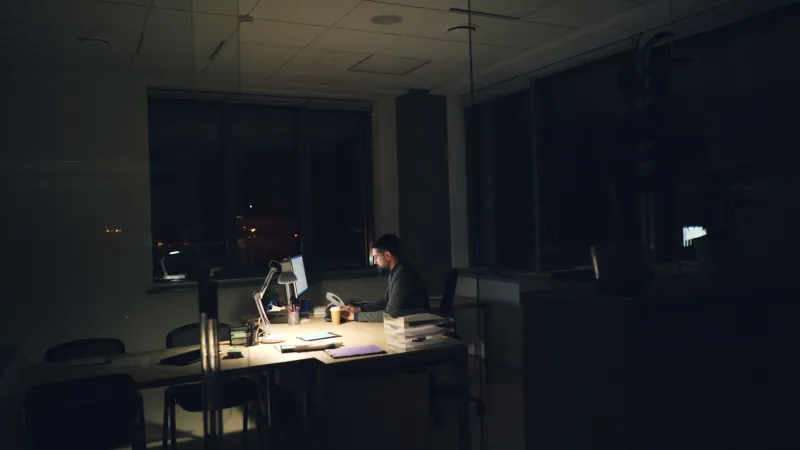
By 4 PM, the pattern is predictable. Somewhere between the third coffee and the commute home, focus dissolves. The to-do list hasn't shrunk, but the brain powering through it has. Most managers write this off as human nature—the body winding down, the afternoon slump, the post-lunch dip.
Workplace researchers are increasingly pointing to a different culprit, though. It's not your energy management. It's not your sleep schedule. It's the notification architecture of the chat platform sitting open on your second monitor, humming along with defaults nobody ever questioned.
Urgency by Design, Not by Choice
Here's the uncomfortable truth about most business messaging tools: they're engineered for engagement, not for focus. Badge counts, red dots, desktop pop-ups, mobile buzzes, and the dreaded @channel mention all exist because they were built that way out of the box. Nobody on your team chose that configuration. The software did.
Each interruption carries a hidden cost. Studies on attention switching suggest it can take upwards of twenty minutes to fully return to a complex task after a disruption. Now multiply that across a workday where the average knowledge worker gets pinged dozens of times—many of them messages that could've waited an hour, or a day, or didn't need them at all.
The result isn't just lost time. It's a slow, steady drain on cognitive reserves. Every time you glance at a red badge "just to check," your brain runs a micro-decision: is this important? Should I respond now? Can I ignore it? None of those decisions feel heavy in the moment. Stack a hundred of them before lunch, and by mid-afternoon the tank is empty.
The @channel Problem Nobody Talks About
Few features illustrate the design flaw better than the broadcast mention. One person types @channel or @here, and suddenly forty people get a notification that ranks alongside a direct message in visual priority.
The intent is usually innocent—"heads up, the server restarts tonight." The impact is a company-wide jolt of artificial urgency. Psychologists who study workplace stress call this a threat to perceived autonomy: you didn't decide to be interrupted, so your brain treats it as something happening to you rather than something you control. Do that enough times, and the low-grade stress accumulates into genuine fatigue.
And here's the kicker: the person sending the broadcast rarely sees the damage. They experience one message. The recipients experience one message times forty, times every sender, times every day.
The Defaults Are the Boss
If you've never touched your notification settings, your workday has been shaped by a product designer in San Francisco, not by your own priorities. That's worth sitting with for a second.
Default configurations are optimized for a simple business goal: keep you in the app. More notifications mean more opens, more sessions, more engagement metrics. That's not a conspiracy—it's just standard product logic. But when the tool's incentives and your team's focus are misaligned, the people doing the work pay the price.
The good news? Almost every major platform—Slack, Microsoft Teams, Google Chat, and the rest—offers granular controls that most users have never opened. The settings exist. They're just buried behind defaults that nobody thinks to challenge.
A Practical Notification Audit
If your team is running on fumes by 3:30, run this checklist before blaming anyone's work ethic:
1. Kill the badge count. The red dot on the app icon is a slot machine lever. Turn it off on desktop and mobile. If a message matters, someone will find a way to reach you.
2. Restrict push notifications to direct messages and explicit keyword mentions. Everything else should live quietly in the app until you choose to look.
3. Ban @channel and @here for anything short of a true emergency. Define what "emergency" means in writing. (Spoiler: it's almost never a status update.)
4. Schedule notification windows. Most platforms support focus hours or do-not-disturb schedules. Set them company-wide—say, 9 to 11 AM for deep work—and make it a norm, not a personal preference.
5. Audit channel membership quarterly. Half the noise comes from channels people joined in 2022 and forgot about. A five-minute cleanup removes dozens of daily pings.
6. Set response-time expectations out loud. If leadership makes clear that messages don't require instant replies, people can finally turn off the pop-ups without fearing they'll look disengaged.
Fix the System, Not the People
The broader lesson here goes beyond settings menus. When a whole workforce is exhausted by late afternoon, the instinct is to offer wellness webinars or time-management training—solutions aimed at individuals. But the exhaustion is coming from the environment, and the environment was configured by defaults nobody reviewed.
Teams that take notification hygiene seriously report something interesting: the 4 PM fog doesn't vanish, but it softens. Attention lasts longer. The workday feels less like a series of ambushes. And crucially, the people who do need to be reached urgently still can be, because the signal is no longer buried under the noise.
Your chat platform is a tool. Left on factory settings, it optimizes for its own metrics. Reconfigured with intent, it becomes what it was supposed to be all along—a way to reach each other when it matters, and leave each other alone when it doesn't.